 The federation
 Intranet


Research topics

ICE3 organizes its activities along two thematic axes, completed by a transverse axis on instrumental and numerical developments.
Axis 1 : Climate variability and forcings
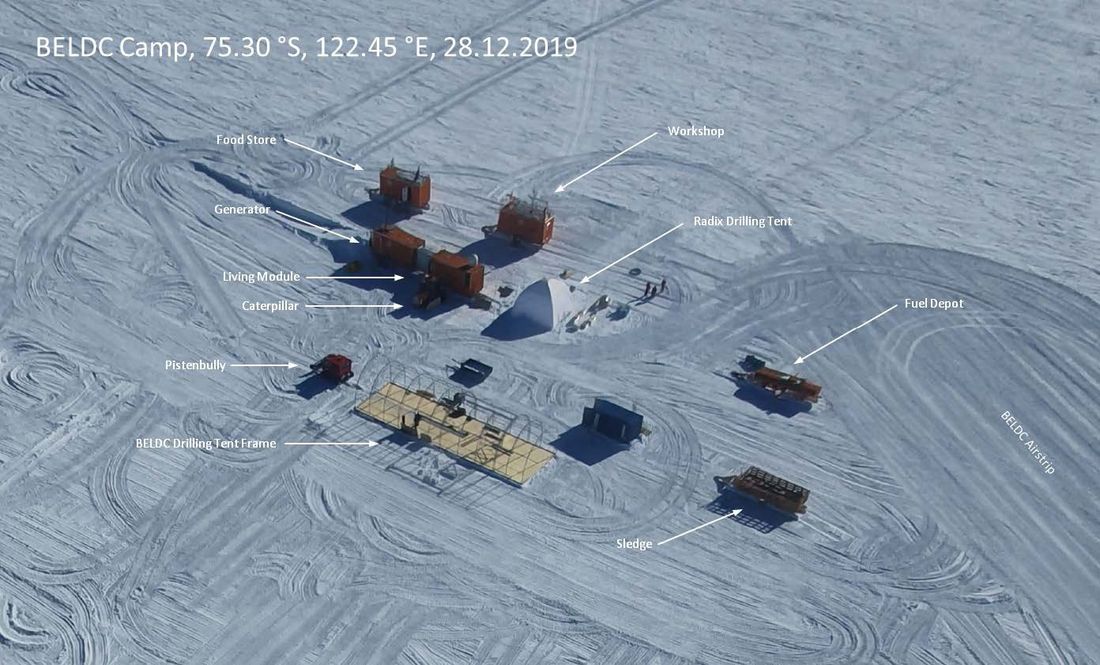
This axis focuses on understanding the interactions between climate, the carbon cycle and orbital forcings at different Quaternary timescales. Recent research has focused on three key periods : the Middle Pleistocene Transition (MPT, 1.2-0.8 Ma), interglacials and the rapid warming of the last Ice Age. This theme is supported by several structuring projects, including H2020 Beyond EPICA Oldest ice (2019-2026), ITN DEEPICE (2020-2024), MOPGA-HOTCLIM (2020-2026), and the ANR BIOCOD (2023-2026) and ToBE (2023-2026).
Major advances have been made in two complementary areas : the development of numerical models and the production/use of new paleoclimatic data. On the numerical front, progress has been made in dating ice and trapped gases, modeling gas trapping, conserving climate signals in ice and understanding Antarctic precipitation. A notable advance is the creation of the AICC2023 chronology, derived from a multi-site probabilistic model integrating several cores (Antarctica and Greenland).
On the data side, high-resolution ice and gas recordings have enabled us to characterize past climatic sequences in great detail. For example, results have shown the impact of terrestrial obliquity on abrupt rises in CO₂ (up to 10 ppm/century) over the past 500,000 years. The role of CO₂ in MPT was explored using a new conceptual model.
In addition, abrupt warming events in Greenland were linked to ocean-atmosphere-cryosphere interactions. Finally, geochemical studies have enabled us to reconstruct the 2,600-year history of stratospheric volcanism and highlight its role in NOx production and its effects on ozone.
Axis 2 : Variability of atmospheric composition and anthropization
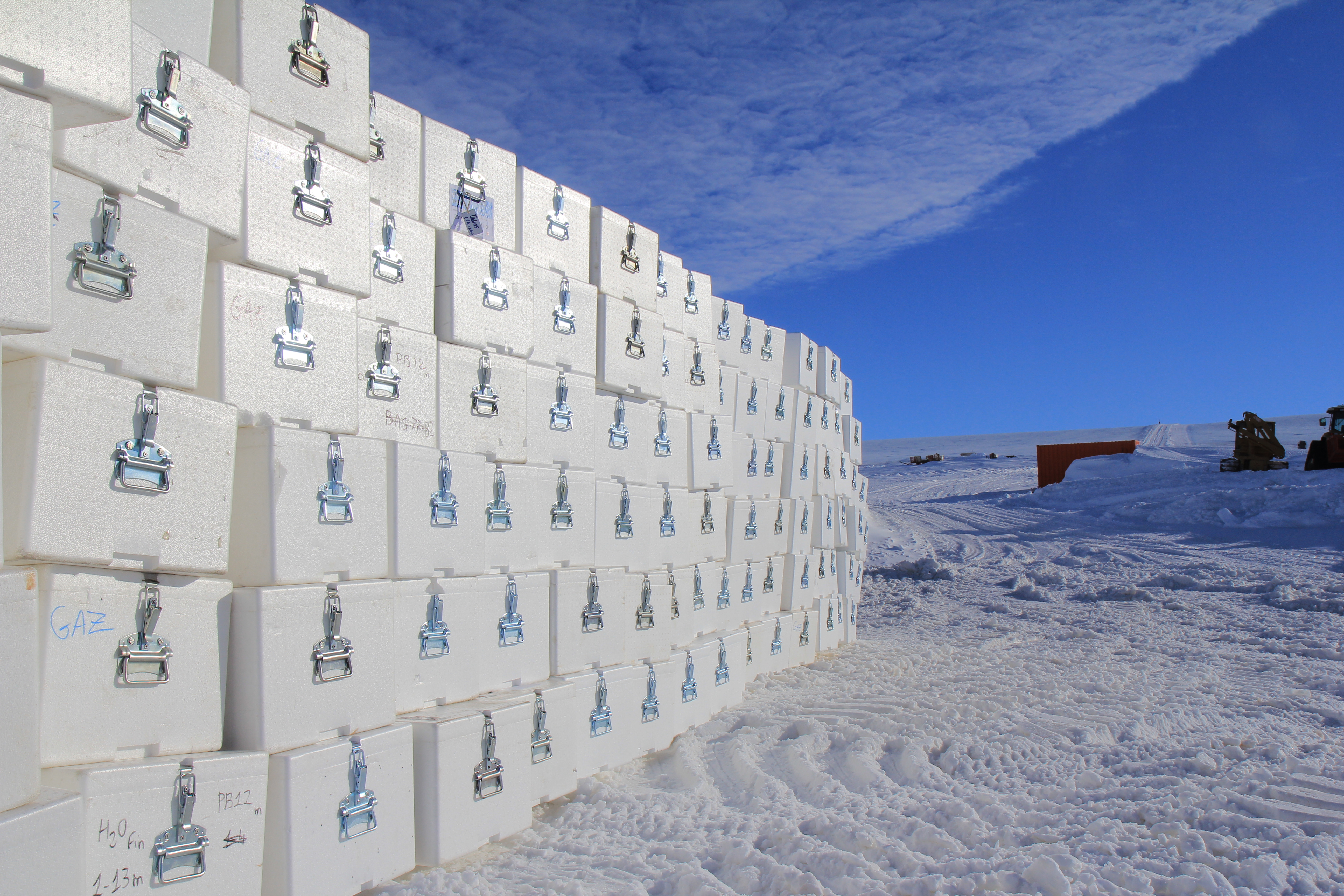
This area explores the major biogeochemical cycles linked to the anthropization of environments, through the analysis of multi-site glacial archives (Alps, Caucasus, Andes) collected in particular by the ICE MEMORY program, in order to document past atmospheric pollution. These cores show persistent heavy metal, nitrate and ammonium contamination as early as the 19th century in the Alps, as well as a transition in pollution sources over time (coal, oil, agriculture). In the Caucasus, ice reveals the impact of desertification, regional climate change and industrial pollution. In the Andes, soot deposits from forest fires are accelerating the melting of glaciers, threatening local water resources.
Cutting-edge isotopic work on nitrate, sulfate and nitrogen oxides (notably via the new Orbitrap-iso instrument) is enabling us to take a more in-depth approach to oxidation processes in the atmosphere. Campaigns in the Arctic (ANR ALPACA 2022-2026) and Antarctic (ERC Doc-Past 2022-2027, IPEV CAPOXI 2021-2025) will highlight the particularities of each polar region, with the Arctic strongly impacted by anthropogenic emissions, while the Antarctic is still dominated by natural processes. The EAIIST program (BNP, ANR 2018-2022) has enabled a groundbreaking study of the East Antarctic Plateau and the establishment of an observation network.
The recently developed microbiology of glacial environments explores the response of microorganisms to environmental change. The ICEBIO and Paleo-MARE projects examine the evolution of microbial communities and resistance to antibiotics and heavy metals, in relation to historical anthropic impacts.
Finally, the ABS project studies the contribution of biogenic sugars to atmospheric particles, in relation to microbial activity, while other research aims to validate ice as a reliable microbial archive.
Transverse axis : development of spectroscopic and numerical tools
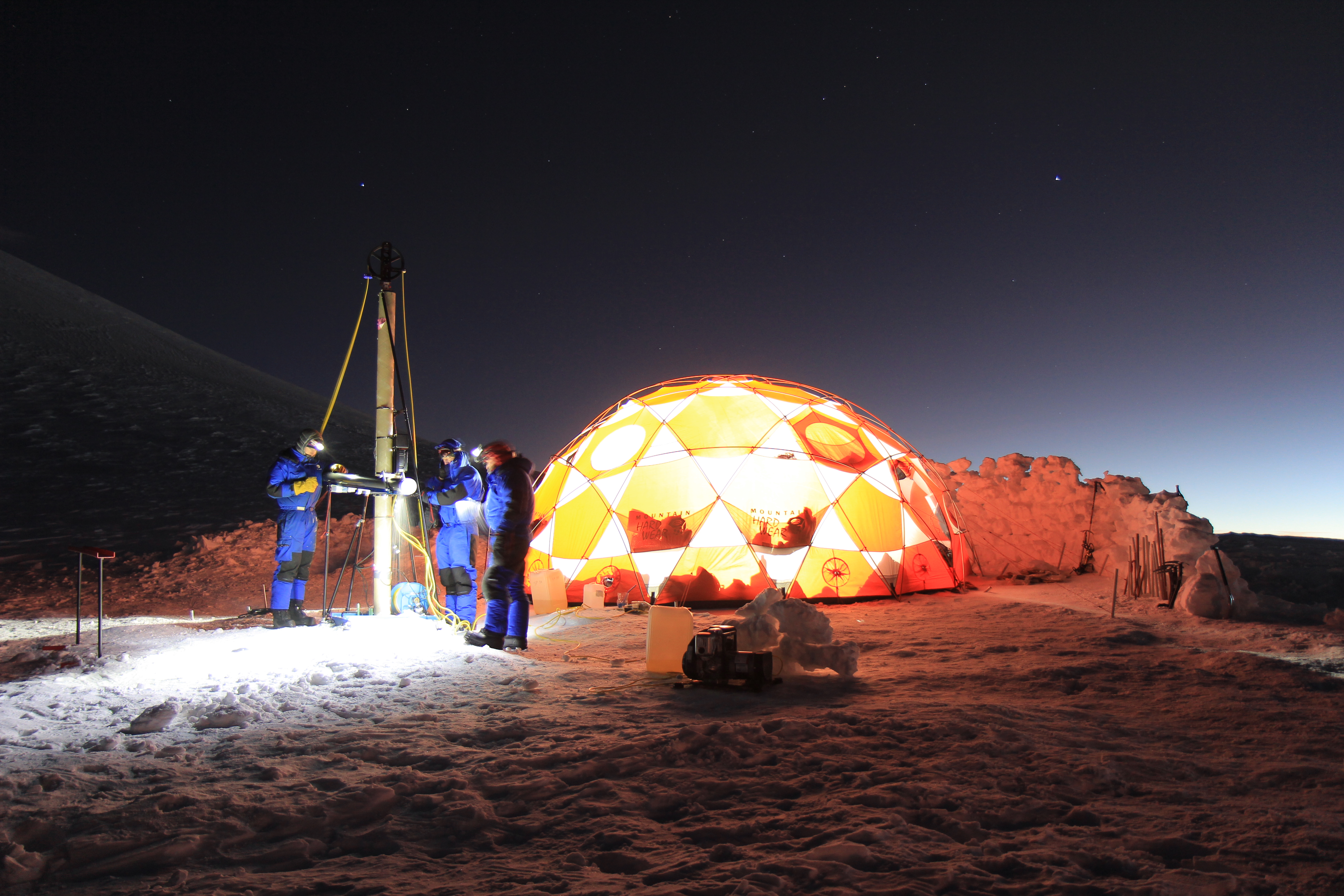
This transverse axis focuses primarily on the development of advanced optical techniques for measuring the composition of gases and their isotopes in a variety of contexts : atmospheric chemistry, ice core analysis and measurements in aquatic environments. Since 2015, the ICE3 team has been carrying out this innovative work in synergy with other IGE teams and external partners.
In atmospheric chemistry, two IBBCEAS instruments have been developed to detect species such as NO₂, CHOCHO, IO and NOx with high sensitivity. These tools are essential for studying the chemistry of NOx in Antarctica (Barbero et al. 2020-2022) and tracing their sources and oxidation pathways (Albertin et al. 2024). In 2024, an open-cell version enabled highly sensitive measurement of the IO radical, potentially involved in the nucleation of new particles. These instruments, combined with an OFCEAS NO analyzer, were installed on the island of Amsterdam as part of the IPEV CAPOXI project.
Concerning the analysis of ice cores, a spectrometer for the measurement of CO₂ and its isotope ¹³C is currently being finalized. It will be combined with a new, more efficient dry grinding technique, enabling the size of the ice samples required to be halved. This development is supported by the OSUG Labex project IsoCarb (2021-2023), the EquipEx+ TERRA FORMA (2022-2029) and the ANR BIOCOD and ToBE (2023-2026). In parallel, a new spectrometer based on the VCOF-CRDS technique for measuring the Δ¹⁷O of CO is under development with LIPhy (ERC DOC-PAST, 2022-2027).
Finally, for the measurement of dissolved gases and water isotopes, the SubOcean instrument enables rapid measurements of CH₄ and its isotopy. Successfully tested at various aquatic sites since 2019, it is in the industrial transfer phase. A sensor for water isotopes (ANR SWIS, 2019-2022) has also achieved the necessary accuracies and is undergoing field tests.
Secondly, this transverse axis focuses on the development of numerical tools for dating and interpreting glacial archives collected from polar ice caps and mountain glaciers.
Ice flow models have been developed. These range from 1D (purely vertical movement) to 2.5D (age flow line, a flow tube model). Emphasis was placed on the speed and accuracy of the calculations. In particular, they have been used to provide a priori dating scenarios for European core drilling (TALDICE, EDC, etc.), and have also been used to determine the drilling site at BELDC.
As these flow models are still limited by their simplifying physical assumptions, a more pragmatic approach has been developed to date glacial boreholes through the probabilistic Paleochrono model. This model aims to combine all available chronological information. Recently, this model has been extended to other paleoclimatic archives (speleothems, marine and lake cores, etc.).
Another of the team’s specialties concerns models of snow densification and gas transport/trapping in snow. These models enable us to estimate the age difference between ice and trapped air bubbles. They also make it possible to trace the history of atmospheric concentrations of these gases, based on the concentrations of gases trapped in the firn.